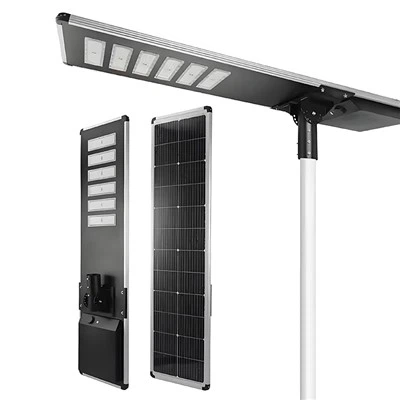
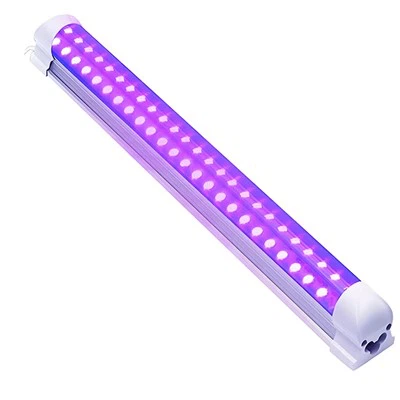
Most people wish to switch to greener options with no power expenditures and a less carbon imprint. The modern-day prudent decision appears to be to replace every street light with a solar LED street light. Solar street lights are automated outdoor lighting fixtures that run only on solar power. Studies show that using solar-powered illumination reduces greenhouse gas emissions by more than 50%. Several questions and concerns may arise as a result of the significant changeover to solar street lighting; a few of them are addressed here.

Does solar outdoor lighting reduce energy use?
Solar-powered landscape lights run on free solar energy and will automatically function from dark to dawn as long as they are charged in direct sunshine. Solar outdoor lighting fixtures are both energy-efficient and attractive. Less light output or a reduced working duration will be the consequence of partial shade or cloudy sky. Energy-saving motion sensors and dimming functions on solar street lights allow for energy savings while still enabling the lights to perform at their peak on cloudy days.
Can I use a battery with a greater mAH for solar lights?
You may, if it is the same voltage, but it is not necessary since solar lights come with a certain mAh battery that is enough for powering them.
What qualities should I check before purchasing solar lights?
Know your lighting needs, the installation location, the intended use of the lighting, the availability of sunshine, and the kind of solar light and its attributes. Also, you need to search for suppliers of high-quality solar items. You can select the best solar unit by becoming aware with the technical requirements of the lighting.
How much electricity does a typical street light use?
Street lights made of sodium vapour use between 100 and 500 Watts. High-brightness LED solar street lights need between 40 and 100 Watts.
What make up a solar street light's primary parts?
solar panel, LED, rechargeable battery, and charge controller.
What kind of solar panel is best for LED street lights?
Solar LED street lights are powered by monocrystalline or polycrystalline solar panels. A solar street light often comes with a solar panel that is suggested for it, and the controller is adjusted appropriately.
Why do the street lights above me come on and go off?
When there is no movement nearby, solar street lights with motion sensors switch off or become dim. If there is any movement detected, they either switch on or light brightly.
Solar lights utilize renewable solar energy, therefore no natural resources are depleted in order for them to operate. Water-resistant and affordable outdoor lighting solutions, solar street lights are ideal for both household and commercial uses. Solar-powered lights provide a number of advantages, and they come in a variety of styles and sizes.
What kind of gas are utilized in street lights?
For street lighting, ionized sodium is employed in the vapour form. To ignite the lamp and regulate its color, sodium lamps use an electric arc formed by vaporized sodium metal and other elements and gases. Since the 1930s, low-pressure sodium-vapour (LPS) lights have been in use. These neon, argon, and metallic sodium-filled lights are built of borosilicate glass. The ability of LPS lamps to pierce fog with intense, monochromatic yellow light made them popular.
The most prevalent street lights nowadays are high-pressure sodium-vapour (HPS) lamps, which provide a yellow-orange hue. The lamp is made of an arc tube, which is filled with xenon, sodium, and mercury. Sodium is a flammable element, and mercury is also included in sodium lamps. Sodium lamps must be disposed of carefully, and currently, LED lights are replacing HPS lights since they are more effective and environmentally benign.
Lead, mercury, or sodium are not present in LED lights, and if they are destroyed, no dangerous gases are released. They emit a recognizable bluish-white light, an amber tint, or yellow-warm colors. Compared to conventional sodium street lights, they are said to be 50% more efficient. As LED bulbs don't emit light pollution or UV light, they are safer for animals and less enticing to nocturnal insects. LEDs have a rated life of up to 50,000 hours and do not burn out like sodium lamps.